Well… we called it! An early safety car set the pace for what was a pretty mundane race for the latter 50 laps. It was a bad day for Mclaren fans, a great day for Bottas fans, and a confusing one for Hamilton fans. But any time Hamilton isn’t first means that the race had to have been at least somewhat interesting…
Opening Lap Safety Car
Advertisements
After a relatively clean first few corners, an awkward collision between Lance Stroll and Carlos Sainz took both drivers out of the race early. Lewis Hamilton also received 2, 5 second time penalties for failed practice starts. Despite being 10 seconds behind, he still managed to finish with a podium.
(motorsport.com)
Other than the Hamilton time penalty and the Sainz-Stroll crash, the race was mostly controlled. Time penalties were given before the race the Alex Albon and Nicholas Latifi for gearbox changes, as well as a penalty for Daniel Ricciardo for now following a race director instruction. Finally, Roman Grosjean got a time penalty for smashing through the cardboard blockades.
The Russian Grand Prix (F1.com)
For what the race lacked in action, it clearly made up for in time penalties. The racers in the points finish were pretty normal, with Charles Leclerc in 6th being the biggest surprise of the race. But once again, Mercedes wins in Russia being still the only constructor to ever a Russian Grand Prix.
Next we head to Germany and the Nurburing, for what looks to be a fantastic Eifel Grand Prix.
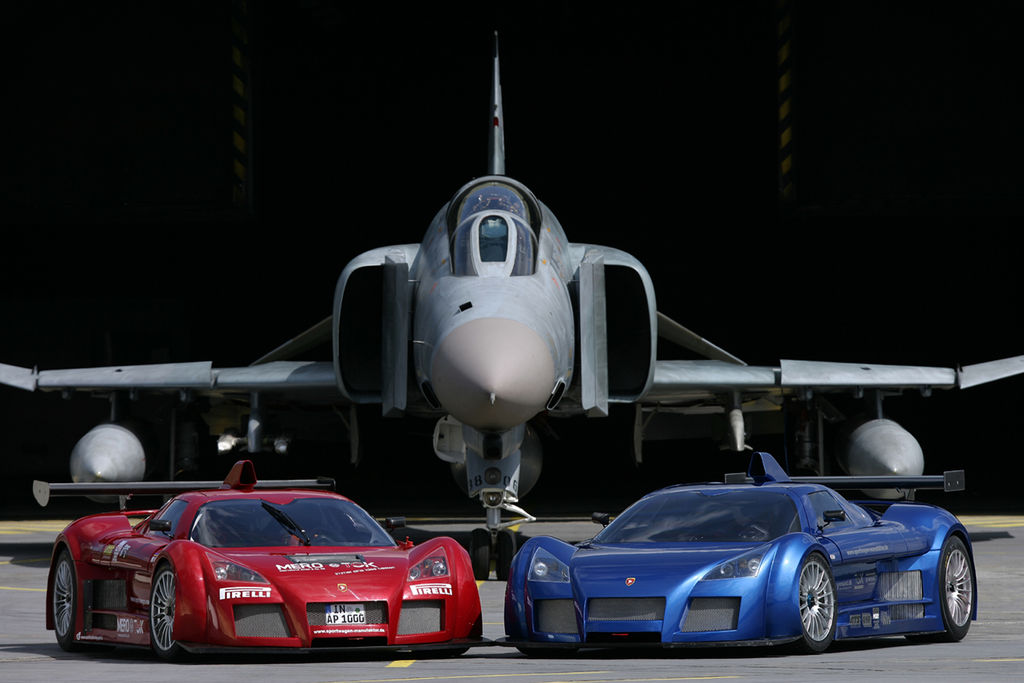
Earlier we did an article on the Zenvo TSR-S, and told you that too often automakers don’t get the credit they deserve due to the fact that they don’t produce cars with massive volume. The Gumpert Apollo follows this to a tee, as it is hardly known and deserves some spotlight.
Our story starts in the early 2000’s when Roland Gumpert proposed his idea of what a sports car should be. At the time he was in charge of a VW-Audi venture in China. He was soon asked by a designer to help create a new sports car. Audi approved this venture and he got to work created the Apollo. It took 4 years for Gumpert to get their first 1:1 scale model, but in October of 2005 they had 2 functioning prototypes and began production of the Apollo. It was immediately praised for its handling, speed, and acceleration. It set a lap record on Top Gear that was held for 2 years before being broken by the Ferrari FXX.
The Apollo uses a 4.2 liter V8 from Audi that has a biturbo. It has a lot of cool features like variable valve timing, 3-way catalytic converter, and a twin exhaust setup. Specs are in a chart below, but now we have to discuss the sad part of Gumpert: the shutdown. In 2013, Gumpert was closed down due to bankruptcy. But this isn’t the last we’ll see of the Apollo…
Specs
Specs about the Gumpert Apollo are pretty hard to find, but also pretty complicated. The Gumpert came in Base, Sport and Race models. They increase in power and decrease in weight in that order.
Gumpert Apollo Base
Gumpert Apollo S
Gumpert Apollo R
Price
Approx $1 Million
App. $1.2 Million
App. $2 Million
Top Speed
224 MPH
224 MPH
224 MPH
Power
641 HP
690 HP
789 HP
Acceleration
3.0 Seconds
3.0 Seconds
3.0 Seconds
Apollo was a serious player. It brought power and finesse all in an absolutely stunning package. But the future of Apollo looks bright. The Apollo name was taken out of bankruptcy, and some new supercars are on the way. Cars like the Apollo Arrow and the Apollo IE are on the way, and they look to change the supercar market right under our noses…
Welcome to Live Formula One Highlights! The below is a continuously-updated log of all the important moments of the Russian Grand Prix. All times are in US Central:
2020-09-26T07:00:00
days
hours minutes seconds
until
2020 Russian GP Qualifying
Advertisements
Highlight Log
(Lap ##) Hours:Min – Driver Name (Team) crashes at Turn 6-Safety called
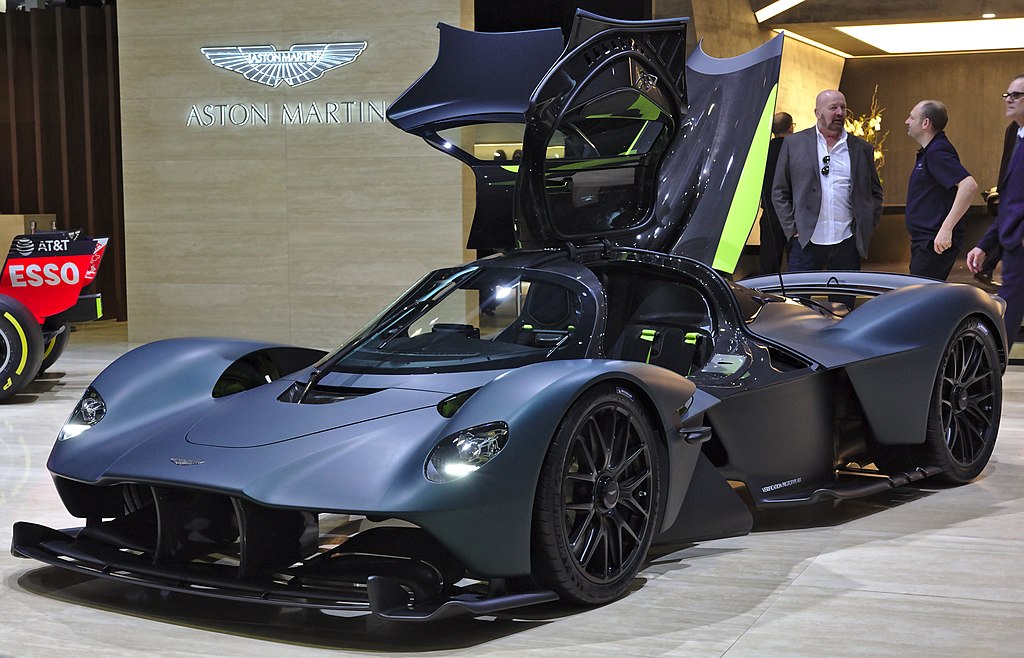
Aston Martin has had a long history of making fast and luxurious cars. From Bond films to Formula 1, Aston Martin has managed to make its way to the pinnacle of whatever it decides to do, and they appear to have done it again. They (along with countless other companies) have created the greatest track car to ever exist. With input from the likes of Red Bull Racing and Adrian Newey to battery packs from Rimac, this car has the potential to be the greatest road-legal car of all time. But will the Valkyrie live up to the hype? Does it have Mclaren F1-like potential to be the car of it’s decade? We’re not sure yet, but we are sure that it will come from Aston Martin.
Lets start of with some Aston Martin Valkyrie specs. Aston Martin plans to make only 150 of these cars, selling each for 3.2 million USD. Aston Martin established a strict no-resale policy so that buyers can’t quickly make profit from selling their Valkyrie. The Valkyrie will feature a 6.5 liter V12 produced by Cosworth specifically for this car. The engine will put out 1,000 horsepower at an insanely high 10,500 RPM. However, this car doesn’t have just an engine. Performance cars today are leaning more and more on hybrid systems to add power and torque. An electric motor from Integral Powertrain adds 160 horsepower putting the total horsepower for the Aston Martin Valkyrie at 1,160 horsepower at 10,500 rpm. Torque is just as outstanding at 900 NM at 6,000 rpm. The Valkyrie will also have an 11,100 RPM red line and can do 0-60 in just 2.6 seconds. But perhaps the most outstanding feature of all is its incredibly low weight. Even with all the technology packed into it, the Valkyrie weighs a mere 2,271 pounds. But the Valkyrie isn’t even the topic of conversation today. The focus is on the Valkyrie’s sleeker, rarer, and faster brother: The Aston Martin Valkyrie AMR Pro.
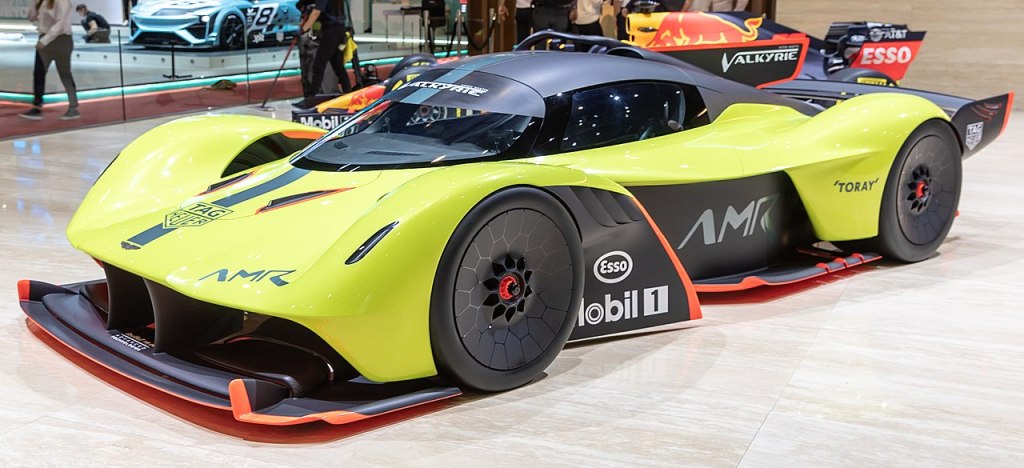
The Aston Martin Valkyrie AMR Pro is a hyper-limited edition hypercar based off of the standard Valkyrie. Only 25 will be made, and they won’t be road legal. Aston Martin enthusiasts will have to endure a cost of 9.15 million dollars if they want to get their hands on a new one. That’s right, there’s a car that selling for almost 10 million dollars. It’s an advanced Valkyrie, which features advanced aero, power, and strips the car of weight. According to Aston Martin, the AMR will have a top speed of over 250 mph. The engine will be a modified version of the V12, and the styling is way more aggressive. Air conditioning and the infotainment system will be ripped out of the car to reduce weight.
Just looking at this car gets me excited about it. It looks like a straight up beast, built from the greatest minds of motorsport. So many companies got their hands in on this project, and that’s why it has the potential to be the greatest car of the decade. Like the Mclaren F1, it is what was put into it that makes it special. Formula Origins help a lot too, as input from AMRBR is sure to make this car the fastest of all time. The question is not if this car will break records, but when.
A Tesla 85kwh battery weighs about 1,200 lbs, but a Chevy volt 60 kwh battery weighs 960 lbs. Why does Tesla have a 14.12 lb/kwh battery, but chevy has a 16 lb/kwh battery? What is Tesla doing that all the automakers are simply missing out on? Today, Elon Musk is speaking at battery day, and we are here trying to unpack all the numbers and science for you.
To start, we must understand what the Tesla battery is. The Tesla battery isn’t just some big battery, its thousands of normal-sized batteries connected in a casing. The reason why Tesla batteries are lighter per kwh is because this method of using lots of small batteries dramatically decreases weight, and has a manageable cost. On the topic of cost, in 2016 a Tesla battery costed $200 per kwh, a figure Elon Mus stressed was the key to making electric cars feasible for all. 4 years later, the cost of a battery cell is well under $100, a feat that years ago seemed unreachable.
It’s no secret that Tesla is insanely efficient at making battery packs, after all compared to Chevrolet their batteries are both lighter and cheaper. But where is this battery technology headed? Are we still on track for decreasing battery costs, or have we reached the top of the hill? Today is battery day, and we get some answers to our battery questions.
So are the batteries getting cheaper? From what we can tell, not dramatically. The process of mining, manufacturing, and distributing these batteries seems to be the main focus of cost-cutting and this isn’t a bad thing. Tesla managed to cut the cost of their batteries in half over 4 years, which in and of itself should make people stop in awe. But lets be honest, logistics and manufacturing has never really ben Tesla’s strong suit, so it is great to see them working on making their battery manufacturing process more efficient than ever. Another topic of discussion is removing as much waste as possible from the process. And this gets at the heart of why anyone would buy a Tesla in the first place, it’s much better for the environment. Tesla wants to make sure its customers know that no matter what, their main focus is still making the world a less polluted place. And maybe while they’re at it, they’ll try to keep costs down…
Battery day is still far from over, so this post will be updated
You can tune in to Battery Day live on Tesla’s Youtube Channel
Zenvo is likely a company you’ve never heard of. Unfortunately companies without super high production numbers tend to fall out of the spotlight, even though they make incredibly advanced cars. Zenvo is one of these companies, and it’s time to shed some light on their epic creation: the Zenvo TSR-S.
Engine and Specs
Let’s start with the engine and some specs. The TSR-S is powered by a 5.8 Liter V8 with 2 superchargers. Power goes through a 7-speed dual clutch transmission that sends power to the rear wheels. The massive V8 puts out a whopping 1,104 horsepower and 840 lb-ft of torque. It also weighs in at just under 3500 lbs. Compared to a Bugatti Veyron it has 117 more horsepower and weighs over 500 lbs less. That should show just how incredible this car truly is.
Unique Features
There are also some very unique features on this car, and to start we will talk about the insane wing on the back. The Zenvo TSR-S features a centripetal wing, that is a rear spoiler that rotates while being driven. A few more unique specs, less features, are the TSR-S price and acceleration. As far as how to get one goes, you are out of luck as finding this car for sale is nearly impossible. It’s cost is also non-existent, as Zenvo never put a price out for the TSR-S. But what is very real is the blisteringly quick 2.8 second 0-60 mph time. This makes it one of the quickest V8 cars ever made.
The Zenvo TSR-S Rear Wing (Reddit)
TSR-S in Media
The Zenvo TSR-S has been featured on countless occasions like Top Gear, Forza Horizon 4 (FH4), and CSR Racing 2. Each time it does the car justice, but never seems to get it the popularity the car very rightly deserves. It’s gained some great media attention, but never seems to quite explode.
Recap
In a brief recap, the Zenvo TSR doesn’t quite get the love it deserves. It is better than a Bugatti on paper, and features technology never seen before in a car. It is the definition of a true performance-based hypercar. Hopefully you can appreciate the silent warrior that is the Zenvo TSR-S.
The Russian Grand Prix has a very brief history in the world of Formula 1, but an interesting one nonetheless. The first recorded race was held an astonishing 107 years ago, in 1913. It was held at an unnamed circuit in St. Petersburg and was won by (no surprise) Benz driver Georgy Suvorin. One more race was held in St. Petersburg the following year and again was won by a Benz driver, but this time it was the German Willy Scholl. After the break out races, Formula One events in Russia took a very long pause. It wasn’t until 1983 that gave Russia some hope of a return to the F1 calendar. The calendar was supposed to feature a Russian Grand Prix, but unfortunately things never fully panned out and in its place stood the ever-popular Hungary Grand Prix. Another long pause came, but in 2010 things finally started to look up for a Russian Grand Prix. By now Russia was already hosting a ton of Motorsport events, and Formula One recently acquired its first Russian driver. With momentum in full power, a 2014 Russian Grand Prix was announced in 2010 to continue until 2020.
A little fun fact, Mercedes is the only team to have ever won a Russian Grand Prix.
Track
The track featured in this year’s 2020 Russian Grand Prix is the Sochi Autodrom, held in Sochi on the coast of the Black Sea. The track is 3.634 miles (5.848 km) long and features 19 turns. It is the 4th longest track in the calendar, but lacks some of the high speed stretches of the likes of Silverstone and Monza. Mercedes has always been very successful on this track, so look to see that pattern continue this year.
Going Into Race Weekend
After the previous Tuscan Grand Prix, the teams will be happy to have a week to make repairs and upgrades. Drivers will also be happy to take a break from the constant crashing happening on the track. After the Tuscan Grand Prix, I think we can finally put aside the Alex Albon rumors. Even after Gasly’s surprise Monza victory, Albon’s podium shows that he has what it takes to get some good points out of the Red Bull seat. Albon should be less jittery now that he seat is safe for the moment, and this confidence should help him calm down and push for a solid result this coming Sunday. The Mercedes, Red Bull, Renault, and Mclaren situations should all be more or less the same as the Tuscan Grand Prix, as nothing dramatic has happened in the paddocks of any of those teams. The Racing Point and Ferrari debacle should continue to get more and more interesting. It seems as though Sergio Perez and Sebastian Vettel have fallen off pace after news dropped of Vettel’s move to racing point. Their decline should continue, and we predict that Vettel will be out of the points Sunday. Finally, Williams starts it’s second race under new management, and so far the team looks to have better pace as they were 1 position off points at Tuscan GP. Now that race was a bit weird, so Russia should be the first chance for us to see what Williams looks like under new management.
Questions
When is the Russian Grand Prix?
The 2020 Russian Grand Prix will be held the 25th, 26th, and 27th of September. FP1 and FP2 are on the 25th, FP3 and Qualifying are on the 26th, and Race day is the 27th.
Where is the Russian Grand Prix held?
In case you missed it from above, the 2020 Russian Grand Prix will be held in Sochi, Russia at the Autodrom.
Formula One F1 – Russian Grand Prix – Sochi, Russia REUTERS/Maxim Shemetov
When does the Russian Grand Prix start?
*Times are in US East*
FP1 is at 2 AM, FP2 is at 6AM, FP3 is at 3 AM, Qualifying is at 6 AM, and the Race is also at 6 AM.
How can I watch the Russian Grand Prix?
USA – ESPN
Canada – RDS/TSN
Mexico – TUDN Mexico
United Kingdom – Sky Sports
France – TF1
Italy – Sky Italia
Russia – Match TV
China – CCTV/Tencent
Japan – Fuji Television Network
Australia – Fox Sports Channel
Predictions
So who will win the Russian Grand Prix? Well, this is probably the easiest Grand Prix to predict. Mercedes have always dominated this track, and it seems their dominant streak isn’t going to end this year. Here are our predictions for the points finishes in the 2020 Russian Grand Prix.
Lewis Hamilton (Mercedes)
Valterri Bottas (Mercedes)
Max Vertstappen (Red Bull)
Carlos Sainz (Mclaren)
Sergio Perez (Racing Point)
Alex Albon (Redbull)
Lando Norris (Mclaren)
Lance Stroll (Racing Point)
Daniel Ricciardo (Renault)
Charles Leclerc (Ferrari)
Recap
A likely Mercedes 1-2 finish at the Russian Grand Prix (skysports.com)
All signs point to a pretty normal race, with a 1-2 Mercedes finish and a high chance of at least 2 DNF’s. But after the last few races, let’s be honest… a normal race might be nice for a change.
Make sure to tune back in for live highlights on race day
Just as the 2020 F1 season started to become just a bit mundane a new track in Mugello, 2 red flags and a safety car make race day just a bit more interesting. This is everything you need to know to understand what went down at the 2020 Tuscan Grand Prix.
Where was the Tuscan Grand Prix?
The Tuscan Grand Prix was held in Mugello, a central Italian city. It is usually the Scuderia Ferrari test track, but it was added to the 2020 F1 schedule to keep 2 races in Italy, but to make sure only 1 was held in Monza.
Were there fans at the Tuscan Grand Prix?
As a matter of fact there was! It was good to see a few fans speckled throughout the stadium, as this is the first 2020 F1 race to feature any kind of fan appearance. The drivers certainly enjoyed waving to actually people during their cool down lap…
Why were the Ferrari’s a dark red?
If you have a keen eye, you might have noticed the Ferrari’s were not sporting their usual bright red, but rather a more maroon color. This is because the Tuscan Grand Prix was Ferrari’s 1000th race, and the team decided a one-off paint job would be perfect for the occasion.
Who was on the Podium for the Tuscan Grand Prix?
In a chaotic race, the podium featured Lewis Hamilton in 1st, Valterri Bottas in 2nd, and Alex Albon in 3rd.
What happened at the start of the Tuscan Grand Prix?
The race started off fine, but about 30 seconds into the race Max Verstappen got squeezed and took himself and 2 other drivers off the track. Carlos Sainz also got spun out by a Racing Point, but managed to make it away from the spin without any major damage.
So what’s the bottom line?
Well, the race was the most interesting all year but unfortunately ended in an all too familiar Mercedes 1-2 finish. Other than that, Alex Albon may have redeemed himself a bit with his first ever red bull podium. For now, we wait another full week for Russia…
Writing articles at a constant pace is some pretty hard work, so after a 2 month hiatus UpShift is getting fresh, weekly content starting in April and going until May. These articles ARE guaranteed, and anything until or after is not promised. This schedule will help you see what articles are coming out when, and note they they will all be released at 7 am Central Time.
April 1: Acura NSX
April 8: Best Fun First Cars
April 15: Infiniti M45: Best Sports Car You’ve Never Heard Of
April 22: What Really is JDM?
April 29: Honda Beat
May 3: Aspark Owl
May 10: Convertibles suck. Period.
May 17: Why the Smart ForTwo is an Insane Sleeper
May 24: Veilside (Mazda) RX-7
May 31: ????? (Mystery)
June 7: Mitsubishi Eclipse: More Than a Crappy Coupe
June 14: Why Volkswagen Owns the Car World
June 21: Stop Buying SUV’s
June 28: Top 10 Summer Cars
Note: Sometimes car news may come out that UpShift will write a surprise article about. Those surprise updates will not effect this schedule.
In a crowded world of super cars, sometimes names get lost in the mix. Spyker, a Dutch automotive company, is more often than not one of these names that gets lost in the mix, but not today. Today we will talk about Spyker, and its lone product the Spyker C8. But a brief history first…
Advertisements
Spyker Car is a Dutch Automotive firm that was started in 1999 and began producing the Spyker C8 Spyder and the Spyker C8 Laviolette. Both cars featured an Audi V8 engine and went on sale in the United States in 2005. Spyker has been in and out of Bankruptcy over the years and had their best sales in 2006 with a total of 94 cars sold. Since 2009, no cars have been produced by the automaker.
Spyker C8 Interior
But, if you haven’t noticed by the title, today the focus is on the Spyker C8 Preliator. But first we need to talk about the Spyker C8 Aileron. The Spyker C8 Aileron was the second generation model of the C8 and it replaced the Laviolette. The new model featured a longer and wider body, as well as an optional automatic transmission. A Spyker C8 Spyder convertible was also released soon after. But after this model, Spyker went dark for a little while. That is until 2016 when they released the third generation model C8, the Preliator. This new Spyker will feature a 4.2 Liter Supercharged V8 made by Audi that produces 525 horsepower. The new model will also feature improved technology as well as a better body frame. The interior on the new Spyker C8 is also incredible, with bright leather throughout the car. There will be a limited run, with only 50 C8 Preliators to be made.
Some Spyker C8 for sale can be found here. Although it should be noted than the price of a Spyker C8 can be around $300,000 to over 1 million dollars.
If you want to read more about known super cars, check out our article about the Noble M600!






 UpShift